Frog Anatomy Explained: With Labelled Diagram
Frogs are amazing creatures, known across the globe for their incredible leaping abilities and brilliant colours that aren’t just beautiful, but also practical. We’ve already taken a look at some of the fun facts about frogs, but now it’s time to take a closer look at their anatomy, which has allowed them to thrive in a range of environments.
What does a frog look like? Key anatomy features
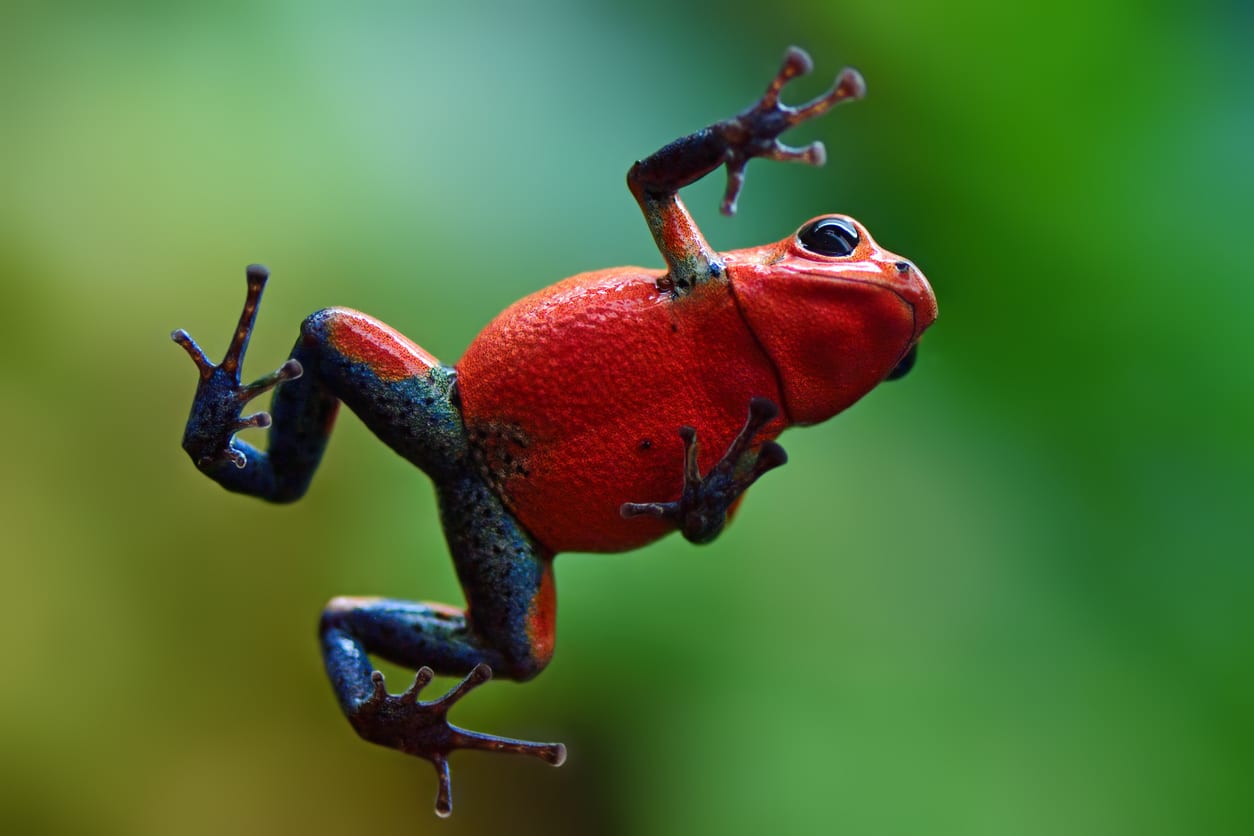
Frogs are amphibians with moist skin that allows them to breathe through their skin (cutaneous respiration). Their skin is generally green or brown, but frogs found in tropical environments can have brightly coloured skin to warn predators of their toxicity, such as the Poison Dart Frog.
Outside of adaptations unique to particular species, most frogs share the same core characteristics.

Eyes
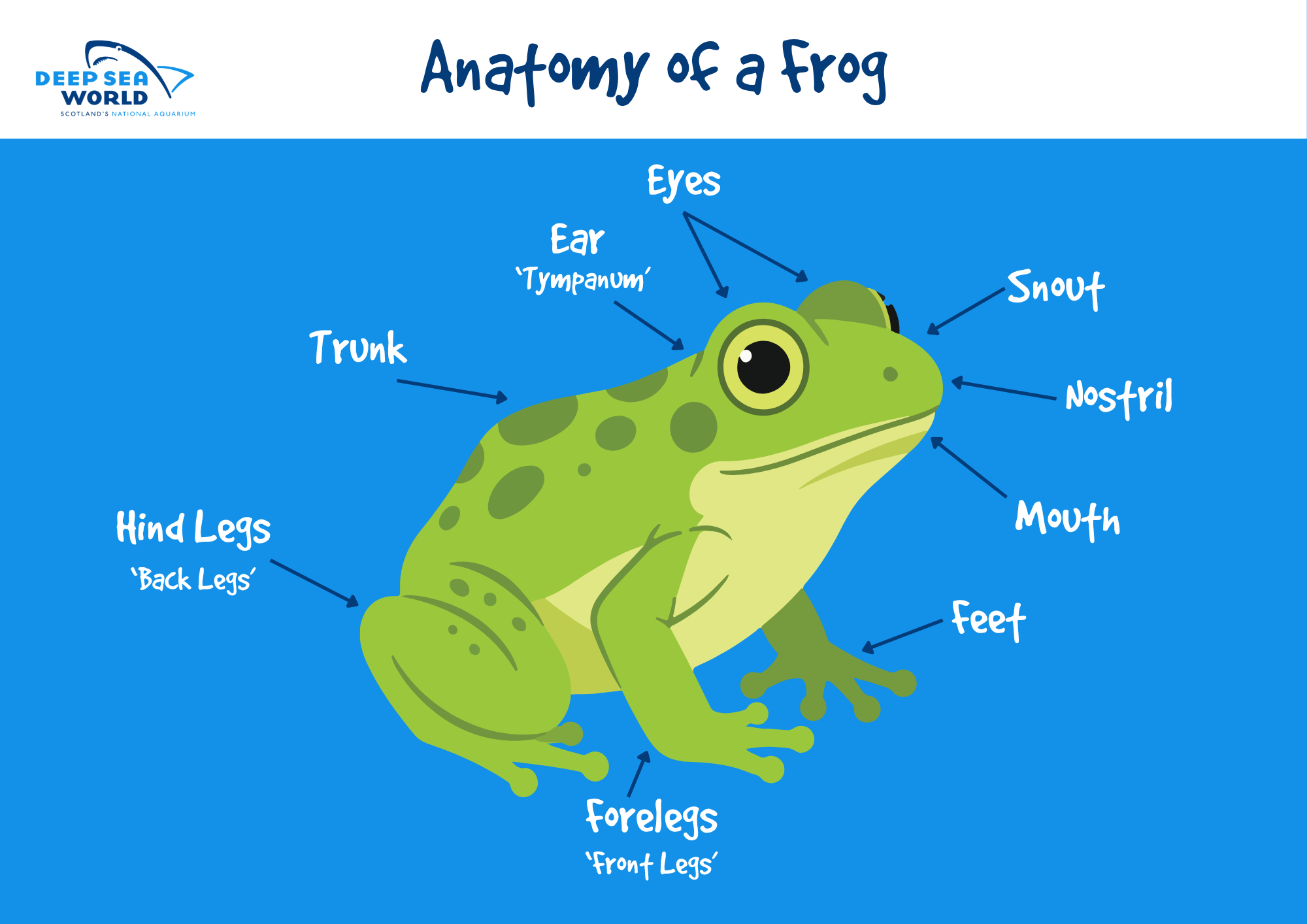
Frogs have bulging eyes that give them a near-360-degree field of vision. For comparison, humans can only see 200–220 degrees horizontally (side-to-side) and 135–150 degrees vertically (up-and-down). Frogs’ eyes have three eyelids, which help to keep their eyes protected whether they’re on land or underwater. Their eyes are also very well adapted to detect colour, even in low-light conditions.
Ears
You might be thinking, “I don’t remember seeing any ears on a frog”. And you’d be correct that their ears are not visible like ours are. Instead, they have internal eardrums that sit behind the eyes. This is to protect their eardrums from being clogged up by water or mud, which would prevent them from hearing.
Snout
The snout is one of the areas where frogs can differ significantly between species. They serve similar functions, but are highly adapted in some cases. Some frogs have long snouts, while others have short snouts, and others still have special adaptations like the Scinax garbei (a type of tree frog), which has little bumps that help it to camouflage.
In general, their snouts serve to carry out functions like breathing, smelling, digging and hunting.
Mouth
The inside of a frog’s mouth is highly specialised for its lifestyle. Frogs catch prey using their tongue, shooting it out with incredible speed and reeling it back in with the prey caught. Inside their mouth, you’ll find a row of teeth on the upper jaw and roof of the mouth, which are used for gripping their food rather than chewing.
Trunk
The trunk of the frog’s body is the largest part of the frog, which contains their organs, such as its heart and liver. However, they do not have ribs or a diaphragm; instead, they rely on buccal pumping (using throat muscles to push air into the lungs) and cutaneous respiration (breathing through their skin) to breathe.
Legs
Frog’s legs are probably the most crucial part of a frog’s anatomy. They allow them to jump, which has proven a very successful way to avoid predators. Their forelegs (front) are typically shorter and provide support and balance for their springy back legs. Their hind legs are a lot longer and more muscular, giving them incredible jumping and swimming abilities.
Feet
At the end of a frogs legs, you’ll find their feet. Much like cats, frogs have 4 digits on each of their front legs and 5 on each of their back legs, for a total of 18 digits. While some have adapted toe pads for climbing, other species have webbed toes that help them to swim more efficiently.
Anatomy of a Frog Poster

Download our anatomy of a frog poster here to stick in your bedroom, classroom, or wherever else you’d like!
3 Additional Facts about the Frogs Anatomy
On top of all that incredible anatomy, we’ve got even more facts to share with you about frogs.
They use their eyes to support with swallowing
Their bulbous eyes aren’t just great at seeing, but they also act as an accessory to swallowing. When they swallow food, their eyes go inwards to the roof of their mouth to help to physically push food down their throats.
Frogs have a three-chamber heart
Unlike humans, who have a four-chamber heart, frogs only have three chambers in their hearts. Because frogs use their skin to breathe, having a four-chamber heart is simply unnecessary. Their three-chamber hearts create turbulence to prevent oxygenated and deoxygenated blood from mixing before they’re sent to the appropriate places around their body.
Frogs don’t drink water
Frog skin has several adaptations which benefit its life. We already know that frogs use their skin to breathe, but they also use it to absorb water, which means they do not have to drink water through their mouth. It’s an efficient way for an amphibian to stay hydrated.
See a frog’s anatomy up-close at Deep Sea World
At Deep Sea World, we’re lucky enough to have several species of frogs within our exhibits, including the green tree frog and the poison dart frog. If you’d like to put your frog anatomy into practise, then book your tickets now!
We hope that you’ve learned a lot about frogs and their anatomy. Despite seeming like just simple jumping machines, frogs are actually far more adapted than we might give them credit for. The animal kingdom is full of incredibly unique animals with even more unique characteristics, which you can learn more about at Deep Sea World Aquarium.