Learn All About the Congo Basin: 10 Impressive Facts
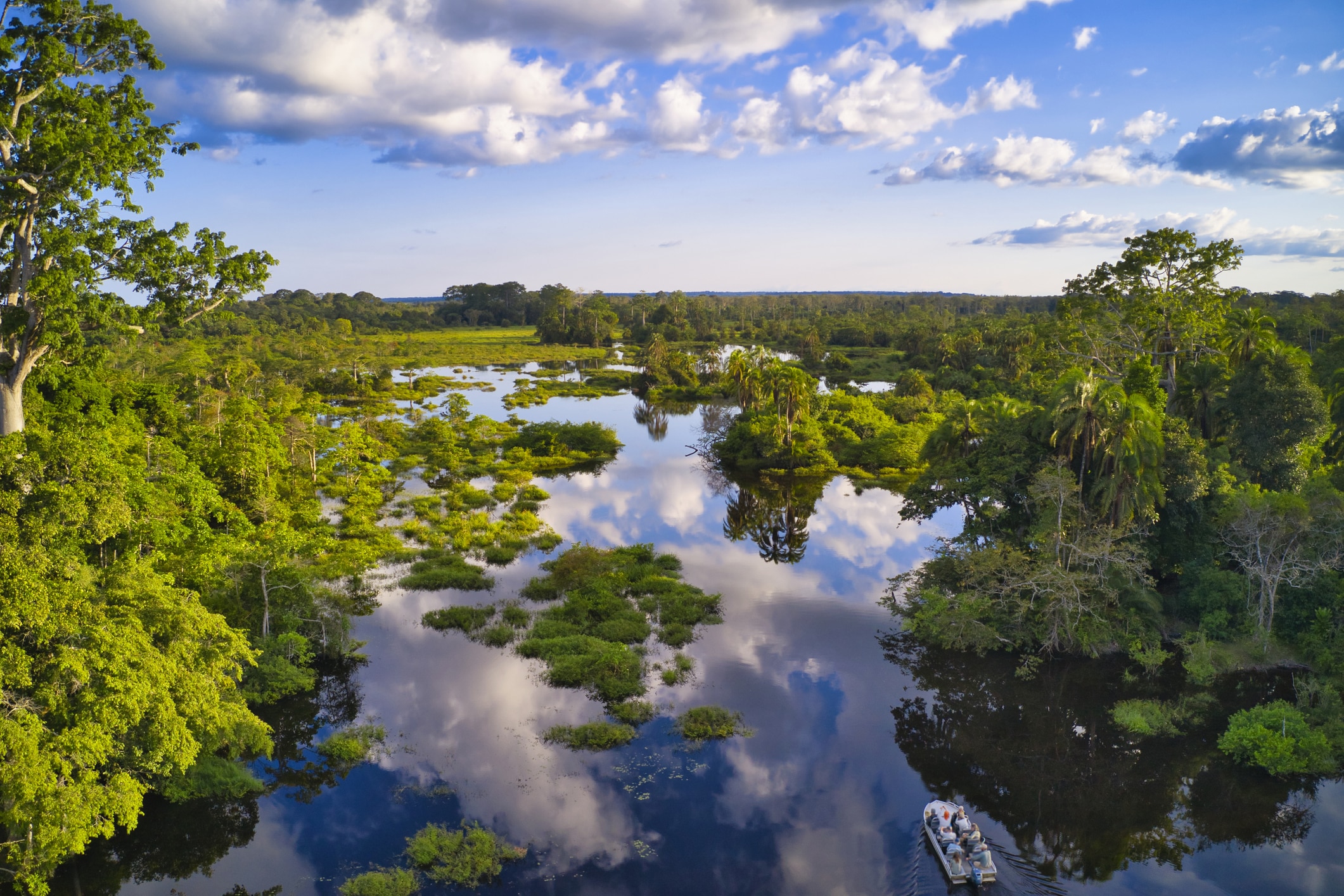
Around the world, there are a number of areas that are crucial for helping the world to thrive. One such area is the Congo Basin, a vast and crucial region in Central Africa that is centred around the Congo River. In this blog, we’ll discover just how important the Congo Basin is and what it does for the world we live in.
What is the Congo Basin?
Named after the Congo River, it is called the Congo Basin as it’s a large geological depression that acts as a drainage area for the river. The name Congo comes from Kongo, a kingdom occupied by the indigenous Bantu people.
As we’ll uncover in this blog, the Congo Basin is a fascinating tropical rainforest that plays a number of important roles and serving as a home for many of the world’s species.
10 impressive facts about the Congo Basin
There’s so much to learn about the Congo Basin, but here are 10 of the most important and impressive facts you should know about the region.
The Congo Basin is the second largest tropical rainforest in the world
We all know the largest rainforest in the world is the Amazon, but the Congo comes in second. It spans around 500 million acres (1.4 million sq miles), an area that’s larger than Alaska. Around 60% of it lies in the Democratic Republic of the Congo.

Congo Basin is the greatest forest carbon sink
A carbon sink is an area that absorbs more carbon dioxide from the atmosphere, than it releases. This is a hugely important role in helping to manage climate change. While the Amazon might be bigger, it is actually the Congo Basin that is the more effective carbon sink, making it the greatest forest carbon sink in the world.
It absorbs around 600 million metric tonnes more carbon dioxide per year than it emits, by storing the carbon in biomass such as trunks, branches and roots and through photosynthesis.
The Congo River is the third biggest river on earth, by water volume
There’s often contention as to the biggest river in the world, but when you look at it by water volume, the Congo River comes out third – after the Amazon and the Ganges. However, it’s also the world’s deepest river and Africa’s second longest river, after the Nile, measuring around 2,900 miles long.
The Congo is also the only major river to cross the equator twice.
The river is believed to have formed more than 2 million years ago
The Congo River used to be known as the Zaire River, and it’s thought that its current course was formed around 1.5-2 million years ago, during the Pleistocene period. The Pleistocene era is also known as the last ice age, and is around the time of the woolly mammoth, dire wolf and saber-toothed cat. This era also saw the rise of Homo erectus, which was the first human species to evolve with a more humanlike appearance and upright stance.

The Basin’s ecosystems are some of the earth’s most important
The Congo is often referred to as the lungs of Africa, and it’s not hard to see why. The region is home to a multitude of ecosystems, not just the tropical rainforest. You’ll also find swamp forests, savannas, peatlands and coastal mangroves here, all of which help to sustain life and ensure different species thrive.
It’s famous for its biodiversity
It’s thought that 1 in 5 of Earth’s living species are found here, including iconic species like forest elephants, gorillas and chimpanzees. You’ll also find the likes of buffalo, hippos and leopards, to name a few. What’s more, there’s around 700 species of fish, a huge percentage of which are endemic to the area and not found anywhere else on the planet. This includes elephantfishes, cichlids, some catfish, tetras and lungfish.
There’s also an abundance of tropical plants, around 30% of which aren’t found anywhere else on Earth.

On average, the Congo Basin has up to 2,000mm of rain per year
The Congo Basin typically has a hot and humid climate, with stable temperatures of around 20-30°C and the humidity stays around 80-90%. It experiences up to 2 metres of rain a year, with most of it falling in the wet seasons of March-May and September-November.
The region is also home to the world’s greatest frequency of thunderstorms and lightning. This is because the warm, moist air from the Atlantic collides with the cooler air over the mountains, triggering almost constant thunderstorms.
A mythical river creature is said to roam the Congo Basin
Like most places around the world, the Congo has its very own folklore. It’s said there is a legendary swamp creature called Mokele-mbembe, which translates to ‘the one who stops the flow of rivers’. It’s described as a long-necked dinosaur or reptile, a bit like Africa’s answer to the Loch Ness Monster!
There have been numerous expeditions to find it, but there’s no scientific evidence to say it actually exists. It originates from the stories passed down of the indigenous peoples in the area.
Over 75 million people live in the Congo Basin
It’s thought there could be between 75-90 million people living across the Congo Basin, spread across 6 countries; Cameroon, Central African Republic, Democratic Republic of the Congo, Republic of the Congo, Equatorial Guinea and Gabon.
Around 60 million people directly rely on the Congo Basin forests for supplies like food, medicine, materials and shelter. This includes approximately 150 different ethnic groups like the Baka, Mbuti and Batwa.

The Congo Basin is at risk of significant endangerment
Unfortunately, an area of this size is not without its threats. The likes of deforestation and poaching are all impacting the Congo Basin and its diverse ecosystems. Climate change is also having an increasingly negative impact too, with more drought and temperature changes reducing the forest’s ability to act as an effective carbon sink.
There are a number of great charities supporting the Congo, and it’s so important to be aware and protect such a critical biodiversity hotspot.
Learn more at Deep Sea World
When it comes to learning, awareness and protection, here at Deep Sea World we’re passionate about helping people understand more about the world’s species and what needs to be done to conserve them. We’re home to a great number of fish, amphibians, crustaceans and invertebrates so that you can discover new things about the animals we share our world with.
Our Congo Basin display is the perfect place to test out your new knowledge on this incredible part of the world, with species like the cardinal tetra (Paracheirodon axelrodi) and Ecuador banjo catfish (Bunocephalus knerii) for you to see with your very own eyes. Book your tickets today for your next visit!


